Real reviews and ratings of Thailand developers
The country stretches extensively from north to south (the distance between north and south is over 1,800 kilometers), offering a wide variety of wildlife, several climate types (humid tropical climate in the north, subequatorial climate in the central and southern parts of the country, and equatorial climate in the region bordering Malaysia), and the ability to accommodate tourists year-round.
Thailand has a permanent population of over 66,000,000. The population is fairly homogeneous, with over 80% being ethnic Thai and Lao. A significant ethnic minority, comprising approximately 10% of the country's population, is Chinese. Approximately 45% of the country's population lives in urban areas.
Thailand is divided into 77 provinces, one of which is the capital, Bangkok. Thailand is divided into five major regions: Central Thailand, Northern Thailand, Eastern Thailand, Northeastern Thailand, and Southern Thailand. Thailand shares borders with Vietnam, Indonesia, Cambodia, Malaysia, Laos, and Myanmar.
Thailand Real Estate Market
Thailand's real estate has attracted the attention of real estate investors for several decades due to its numerous advantages.
Compared to European real estate, the price per square meter of real estate in Bangkok, Phuket, and Pattaya remains quite low. However, it is well-suited for rental income and capital growth.
Average property appreciation in Thailand's resort areas ranges from 8% to 12% per year, depending on the project. Rental yields approach 10% per year, meaning the payback period for real estate in some cases can be less than 10 years.
At the same time, Thai real estate is well-suited for personal residence due to its pleasant climate and well-developed infrastructure. Many Thai developers offer guaranteed income programs when purchasing real estate, where the construction company pays a fixed amount for several years after the purchase. This also helps promote Thai real estate among international investors.
Foreign Investors and Thai Real Estate
Thailand already leads all Southeast Asian countries in the number of foreign buyers. As of 2023, the number of properties purchased by foreigners in Thailand will exceed 10,000.
The main locations that attract foreign real estate buyers are Chonburi Province, home to the resort town of Pattaya, the capital city of Bangkok, and the island of Phuket. A significant number of foreign buyers of Thai real estate purchase their properties specifically for rental purposes.
Restrictions for Foreign Buyers
Foreign buyers are eligible to purchase almost all types of real estate in Thailand, but different title registration regimes apply to different types of property. Only Thai citizens are permitted to own land in Thailand.
Foreigners can register full ownership of an apartment or villa located on a plot of land, but the land itself can only be leased long-term. This is one of the most important rules underlying Thai real estate legislation. Foreign real estate buyers have two legal ownership regimes: freehold and leasehold.
Freehold is the complete ownership of real estate, evidenced by a title deed, known in Thailand as a chanote. The only type of property that can be purchased under freehold is an apartment in a condominium-type residential complex.
However, by law, foreign ownership cannot exceed 49% of all apartment owners in the complex. The remaining apartments must be sold either to Thai citizens or to foreign nationals under a leasehold.
With a freehold apartment, the owner can hold the property indefinitely and dispose of it as they wish, including selling, gifting, and bequeathing it, as well as participate in and vote at owners' meetings in the residential complex.
Purchasing freehold property is only possible with funds received from abroad. Freehold apartments purchased by foreigners are always 5-10% more expensive than leasehold apartments. Freehold apartment registration is more expensive than leasehold apartments, amounting to 2-3% of the apartment's value.
A leasehold is a legal regime that is essentially a long-term lease of a property. The standard leasehold term is 30 years, with the possibility of extension to a maximum of 90 years.
The foreign buyer has the right to dispose of the property, including selling, inheriting, and subleasing. A Chanote document, which contains information about the termination of the lease agreement, also serves as proof of ownership of the property. The owner leasing the property through a leasehold is either a Thai legal entity if the purchase was made from a developer, or a Thai individual if the purchase was resale. Foreign buyers purchase apartments in non-condominium residential complexes, apartments allocated to Thai nationals, or land on which a villa is built, which they own outright. Purchasing property through a leasehold is somewhat simpler and more cost-effective than through a freehold.
The funds do not necessarily have to come from abroad; the cost of such property is, on average, up to 10% lower, and all registration procedures cost approximately 1% of the property value. When selling a leasehold property, you do not need to pay property sales tax. However, it should be noted that a leasehold agreement may not be renewed after 30 years. When registering a leasehold, it is mandatory to register the agreement with the Land Office of Thailand.
How to choose property in Thailand
Recommendations for choosing property in Thailand:
- Pay attention to reliable developers, such as Supalai and Sansiri;
- Choose real estate agencies that provide legal support and transparent terms of cooperation;
- Conduct an independent inspection of the property and a thorough review of the property documents.
Purchasing real estate does not entitle a foreigner to a residence permit or a more favorable visa regime. However, Thailand currently has the Thailand Privilege program, formerly known as Thailand Elite, which allows you to obtain a visa valid for 5 to 20 years for $25,000.
Some Thai developers assist with obtaining this visa as a gift with the purchase of real estate.
Stages of Buying Real Estate in Thailand
Buying real estate in Thailand begins with selecting and reserving the desired property.
The reservation agreement requires the buyer to pay a 1% deposit of the property price. This deposit is generally non-refundable if the purchase is not completed due to the buyer's fault. The next step is a legal due diligence of the property and the owner. This includes a property inspection (real owner, possible encumbrances), a verification of the seller's company, and a legal review of the contract.
After the deposit is paid, the seller receives a preliminary contract within one to two weeks, which can be amended. Once the terms of the contract are agreed upon, payment is made for the property.
The contract must be registered with the Land Office, after which the buyer receives several documents confirming the purchase: a sales contract in Thai with seals and stamps, a property title deed (Chanote), and a house register (Blue Book), which contains the address and general information about the property.
Real Estate Prices in Thailand
Average real estate prices (apartments) in different regions of Thailand:
- Phuket from $80,000 to $250,000;
- Pattaya from $50,000 to $150,000;
- Bangkok from $100,000 to $300,000.
Thailand has one of the leading economies in the region. Exports largely underpin the country's wealth. The country actively exports cars (ranks among the top ten automakers in the world), electronics, rubber and plastic products, chemicals, agricultural products (rice, corn, sugarcane, bananas), and tourism. The agricultural sector employs more than half of Thailand's working-age population.
Thailand's main foreign trade partners are China, the United States, Japan, Vietnam, and Hong Kong.
Tourism in Thailand
Thailand's tourism industry accounts for approximately 16% of its GDP. More than 35,000,000 tourists from around the world visit Thailand annually.
Among the most popular destinations for international tourists are Bangkok, Phuket, Pattaya, Chiang Mai, Koh Samui, and Krabi. A significant number of tourists come to Thailand specifically for a beach holiday, as the local beaches are numerous, diverse, and offer a vast array of activities. Diving, snorkeling, and windsurfing are available on the beaches. Numerous Thai massage parlors are typically located near the beaches.
The beaches in Thailand's resort areas have sandy beaches with a comfortable, gently sloping entry into the water. The best, most beautiful, and most Instagrammable beaches are located in Krabi Province and Phuket. Ao Nang is Krabi's most popular resort, while Phuket's best beaches are rightfully considered Kamala Beach, Kata Beach, Karon Beach (for active vacationers), and Bang Tao. Pattaya Beach is the largest beach in Pattaya, and Dongtan Beach is considered the most well-maintained.
Tourists vacationing in Pattaya can take a ferry to Koh Larn Island. The journey takes about 40 minutes, but the beaches here are less crowded and the water is much cleaner. Koh Samui, with its white beaches, coconut groves, and stunning waterfalls, is ideal for family travel. For yachting and boating, the Phi Phi Islands are ideal, offering some of the most beautiful landscapes in Thailand. The famous Maya Bay is also located here. Among the Phi Phi Islands, Koh Lanta, Hua Hin, and Koh Chang are particularly noteworthy.
Nature lovers can visit Thailand's 70 national parks and reserves. Khao Yai National Park, located two hundred kilometers from the capital, is the most famous of the country's national parks. Here, you can see elephants, tigers, and bears in their natural habitat.
This national park is also home to Erawan Waterfall, one of Southeast Asia's most beautiful waterfalls. Other famous national parks, reserves, and natural attractions include Doi Inthanon National Park, Samet Island National Park, Erawan National Park, Khu Khut Waterfall and Bird Park, San Kamphaeng Hot Springs in Chiang Mai Province, and Nong Nooch Tropical Park in Pattaya, with its botanical garden and rock garden.
Khao Yai Island is ideal for those seeking a relaxing getaway in a virtually untouched location. It's a great destination for a quiet family vacation. Thai culture is a unique blend of Buddhism, ancient Indian traditions, and the Khmer people, with whom the Thais have lived side by side for millennia. Buddhist temples and shrines are Thailand's most important attractions.
The religious center of Thailand is Ayutthaya, which was the capital of the country many centuries ago. Three royal palaces and more than 370 temples were built here. More than a dozen temples and monasteries, the city museum, and the Wang Luang Palace are open to the public.
The country's capital, Bangkok, also boasts numerous temple complexes popular with tourists. These include the Temple of the Emerald Buddha, the Temple of the Dawn, the Temple of the Golden Buddha, and the royal temple complex, the Marble Temple. The famous Wat Yan is located near Pattaya. The island's oldest temple is the Phra Nang Sang Temple.
To make a choice when buying real estate in Thailand, you can check out the rating of real estate agencies. And if you are interested in a specific location, then study the projects and reviews of real estate developers in Phuket.


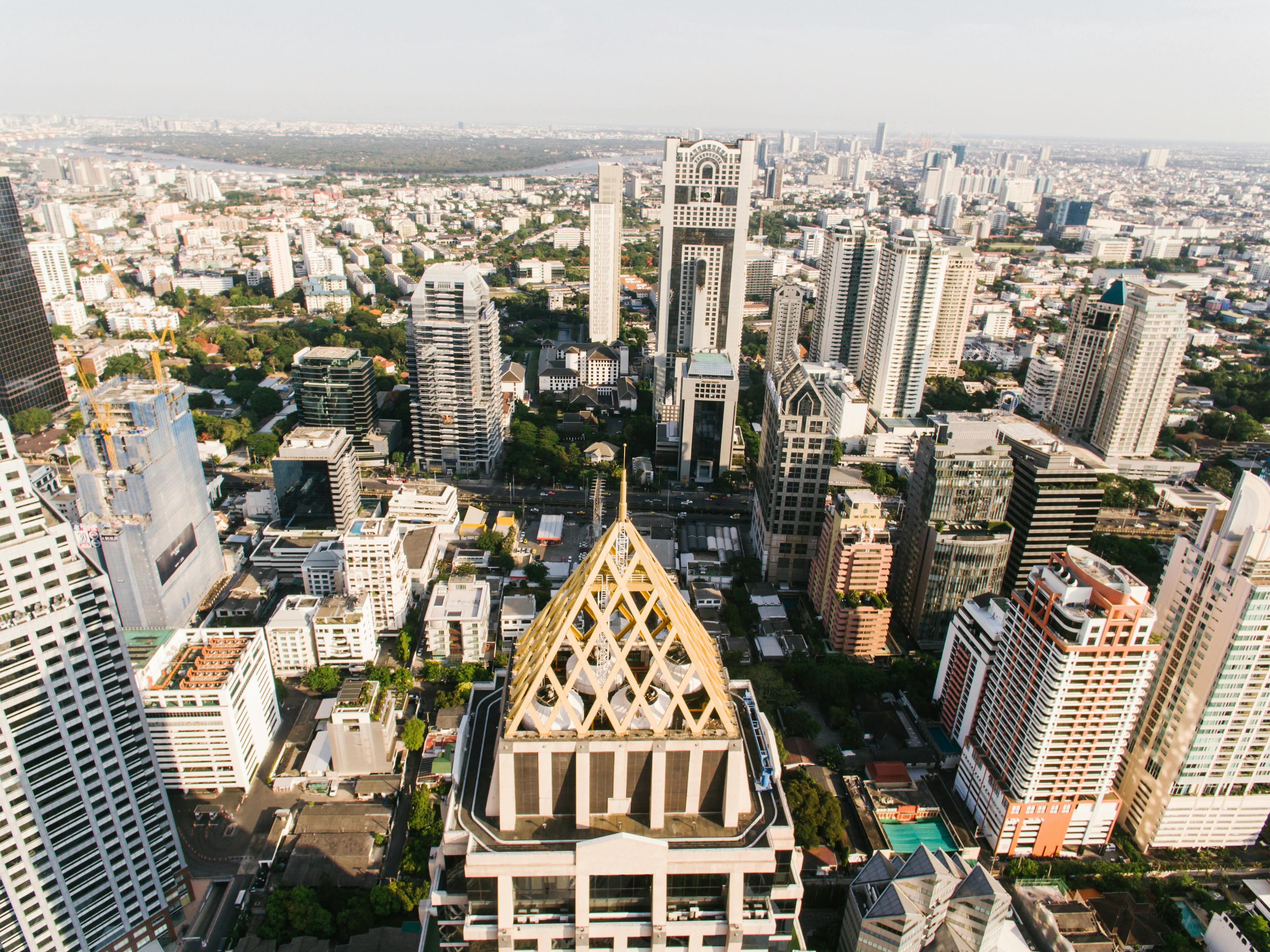


 Thailand, Phuket