
- Real estate developers
- Georgian Real Estate Developers
- Turkish Real Estate Developers
- UAE Real Estate Developers
- Cyprus Real Estate Developers
- Thailand Real Estate Developers
- Indonesian Real Estate Developers
- Montenegro Real Estate Developers
- Spain Real Estate Developers
- Greek Real Estate Developers
- Bulgarian Real Estate Developers
- Bahrain Real Estate Developers
- Russian Real Estate Developers
- Qatar Real Estate Developers
- Azerbaijan Real Estate Developers
- US Real Estate Developers
- New York City Real Estate Developers
- Maine Real Estate Developers
- California Real Estate Developers
- Massachusetts Real Estate Developers
- Connecticut Real Estate Developers
- Vermont Real Estate Developers
- New Hampshire Real Estate Developers
- Rhode Island Real Estate Developers
- Florida Real Estate Developers
- Texas Real Estate Developers
- Washington State Real Estate Developers
- Ohio Real Estate Developers
- Washington (DC) Real Estate Developers
- Saudi Arabian Real Estate Developers
- Kazakhstan Real Estate Developers
- Canadian Real Estate Developers
- Italian Real Estate Developers
- Portuguese Real Estate Developers
- French Real Estate Developers
- UK property developers
- Monaco Real Estate Developers
- Swiss Real Estate Developers
- Republic of Singapore Real Estate Developers
- Malaysian Real Estate Developers
- Philippines Real Estate Developers
- Vietnamese Real Estate Developers
- Cambodian Real Estate Developers
- China Real Estate Developers
- Oman Real Estate Developers
- Real Estate Agencies
- Georgian Real Estate Agencies
- Turkish Real Estate Agencies
- UAE Real Estate Agencies
- Cyprus Real Estate Agencies
- Thailand Real Estate Agencies
- Indonesin Real Estate Agencies
- Montenegro Real Estate Agencies
- Spainish Real Estate Agencies
- Greece Real Estate Agencies
- Bulgaria Real Estate Agencies
- Bahrain Real Estate Agencies
- Russian Real Estate Agencies
- Qatar Real Estate Agencies
- Azerbaijan Real Estate Agencies
- US Real Estate Agencies
- New York Real Estate Agencies
- Maine Real Estate Agents
- California Real Estate Agencies
- Massachusetts Real Estate Agents
- Connecticut Real Estate Agencies
- Vermont Real Estate Agents
- New Hampshire Real Estate Agents
- Rhode Island Real Estate Agents
- Florida Real Estate Agencies
- Texas Real Estate Agencies
- Washington State Real Estate Agencies
- Ohio Real Estate Agencies
- Washington (DC) Real Estate Agencies
- Saudi Arabian Real Estate Agencies
- Kazakhstan Real Estate Agencies
- Canadian Real Estate Agencies
- Italian Real Estate Agencies
- Portugal Real Estate Agencies
- France Real Estate Agencies
- UK Real Estate Agencies
- Monaco Real Estate Agencies
- Switzerland Real Estate Agencies
- Republic of Singapore Real Estate Agencies
- Malaysia Real Estate Agencies
- Philippine Real Estate Agencies
- Vietnam Real Estate Agencies
- Cambodian Real Estate Agencies
- China Real Estate Agencies
- Oman Real Estate Agencies
- Countries
- Real estate
- Emigration programs
- $USDEng
 Рус
Рус EngSpa
 Chi
Chi
Price
Reviews of Real Estate Developers in China





China
Shanghai, Hong Kong
CIFI Holdings (Group) Co. , Ltd. , founded in 2000, is one of the largest real estate developers in China. The company specializes in the desi… More details

China: are you looking for property here?
Request a free consultation with Domik.io specialists.
We will select the best offers based on your criteria.


China
Shanghai
Seazen Holdings Co. , Ltd. was founded in 1993 in Changzhou, Jiangsu Province, and today is one of the leading Chinese multifunctional real e… More details

China
Beijing
Longfor Group is one of the leading Chinese developers, engaged in the design, construction, and operation of real estate. The company succe… More details


China
Beijing
Beijing Capital Development Holding (Group) Co. , Ltd. (BCDХ) is one of the leading real estate companies in China, established in 2005. The… More details


China
Beijing
SOHO China is one of the leading Chinese companies in the commercial real estate sector, specializing in the design, construction, and manag… More details
Developer's projects
View all projects 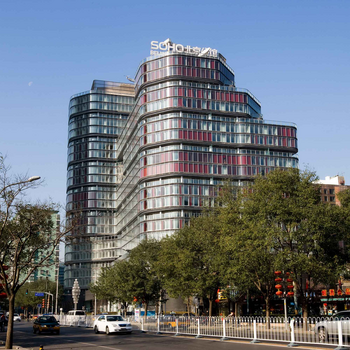
China is one of the largest countries by territory and the largest by population, located in East Asia. The permanent population of the country is more than 1,411,750,000 people. The People's Republic of China consists of 22 provinces, 5 autonomous regions, 4 municipalities (Beijing, Shanghai, Chongqing, Tianjin) with the capital in Beijing. There are several climatic zones in the country. In the southeast of China there is a subtropical climate zone, in the northwest - a sharply continental climate. Only 10% of China's territory is densely populated, about 90% of the country's total population lives there. These territories include the floodplains of the large Yangtze, Huanghe and Zhujiang rivers, as well as the coastal areas of the country. China borders with many countries: Russia and the Democratic People's Republic of Korea in the northeast, Mongolia in the north, the Republic of Kazakhstan in the northwest, Kyrgyzstan, Tajikistan and Afghanistan on the western border, Pakistan, India, Nepal, Bhutan in the southwest, and Vietnam, Laos and Myanmar in the south. The People's Republic of China is one of the most economically developed countries in the world, the first country in the world in terms of GDP, the leader in industrial production, and one of the world's main sales markets. China is a member of several international organizations: the UN, the World Trade Organization, the Asia-Pacific Economic Cooperation, the G20, BRICS, and the Shanghai Cooperation Organization.
Real Estate in China
Since the early 1990s, China has seen colossal urban construction, new residential areas have been built, numerous commercial real estate projects have been constructed, and construction companies have created the necessary urban infrastructure. Real estate in China is represented by all possible types of residential and commercial properties, from individual residential construction to neighborhoods consisting of multi-story residential buildings, fully provided with infrastructure facilities. Developers in China are more than one hundred thousand Chinese and international construction companies, which differ in size, specialization and the territory in which they operate.
China's population has ceased to show high growth rates and is no longer a driver of real estate sales, but ongoing urbanization attracts a huge number of people to cities - economic centers. The total population of China who live and work in cities other than those where they were born is approximately 376 million people or 27% of the total population of the country. This constant flow of people will maintain high demand in the market for the purchase and rental of residential real estate. In addition to young professionals, significant demand for real estate is created by students, young families, and elderly couples. This creates a need for developers, management companies and real estate agencies in China. Government support measures have resulted in the introduction of more than 9,000,000 affordable housing units to the real estate market between 2021 and 2025. Of these, approximately 10% are new apartments, the rest were introduced to the market as a result of renovation, reconstruction, repurposing of real estate and other measures. The rental income of an apartment in China varies depending on the type of apartment, location, area, but on average it is about 4% per annum.
About two-thirds of all residential real estate in China was built since 2000, so a significant proportion of the properties are modern types of real estate that meet the needs of most buyers. New residential complex projects in China are designed for even more demanding buyers with high standards, therefore, they provide a more comfortable environment with a large number of necessary infrastructure facilities.
The Chinese government has recently applied various economic measures to stimulate the real estate market. These included reducing the interest rate on existing mortgages, implementing a special program for the development of vacant land, as well as the reconstruction of unfinished new housing, and implementing a new stage of the program for the renovation of urban-type settlements. The tourism sector has a certain impact on the economy and real estate. The Chinese government is taking measures to support and develop the tourism industry. In mainland China, more favorable visa conditions were introduced in 2024 for tourists from many countries, convenient payment systems were ensured, many tourist locations introduced ubiquitous Wi-Fi coverage, as well as mobile payments that support foreign bank cards. As a result of these state and local efforts, the number of tourists in mainland China increased to 8.2 million in the third quarter of 2024, which is 49% higher than in the third quarter of 2023. The increase in the number of tourists arriving in the country has a positive impact not only on the short-term rental business, but also on the retail sector, which indirectly affects the commercial real estate market.
Advantages of investing in Chinese real estate
Investors in Chinese real estate note an annual increase in demand for affordable rental housing for the middle class, which is explained by ongoing urbanization and high rates of internal migration. The Chinese government actively supports construction companies engaged in the construction of affordable rental housing, which reduces the risk of investing in this part of Chinese real estate. In this case, investors can be attracted not only by the profit received, but also by the possibility of positive social influence and assistance in solving an important social issue.
Reviews of Chinese real estate developers
Our website contains reviews of Chinese developers left by real estate buyers. Reading the reviews will allow you to draw conclusions about the reliability of developers, the quality of construction and finishing, as well as the construction time. This will help you make an informed decision about the possibility of investing in real estate of one or more developers.
To make a choice when buying real estate in China, you can check out the rating of real estate agencies. And if you are interested in a specific location, check out the projects of Beijing real estate developers.
Economy of China
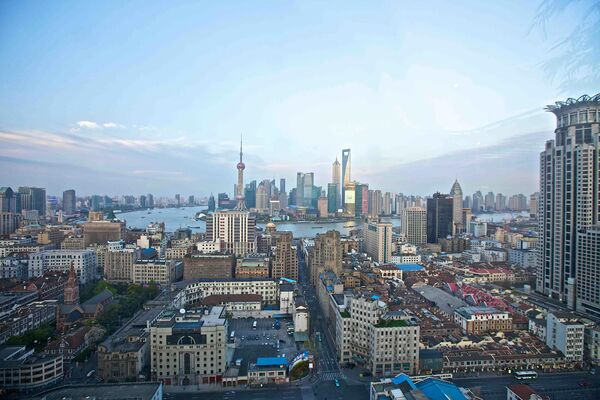
China is one of the most economically developed countries in the world, the world leader in GDP and industrial production, the most populous country in the world (the permanent population exceeds 1,411,750,000 inhabitants), the largest exporter and one of the largest markets in the world. The People's Republic of China is a member of numerous international organizations: the UN, the World Trade Organization, the Asia-Pacific Economic Cooperation, the G20, BRICS, the Shanghai Cooperation Organization. The state has a common border with the Russian Federation, the Democratic People's Republic of Korea, Mongolia, Vietnam, Myanmar, Laos, Bhutan, Nepal, India, Pakistan, Tajikistan, Afghanistan, Kyrgyzstan. The administrative division of the country provides for the presence of 22 provinces, 5 autonomous regions, 4 municipalities (Beijing, Shanghai, Chongqing, Tianjin) with the capital in Beijing. The People's Republic of China is a leader in science, accounting for almost a quarter of all global expenditure on research and development. China is located in East Asia and is the second largest country in Asia and the fourth largest in the world, behind only Russia, Canada and the United States. The country is extremely diverse in climate, with several climate zones ranging from subtropical in the south to sharply continental in the northwest.
The economic well-being of the People's Republic of China is based on developed industries, agriculture, finance and trade, tourism, construction and real estate. Since the 1980s, the country has experienced rapid economic growth, with GDP figures growing by up to 15% per year, later the growth slowed down slightly and amounted to 8% per year, which was one of the highest in the world. The colossal growth of the construction sector began in the early 1990s and has not stopped to this day. The growth of the country's urbanization has led to the construction of a huge number of new districts in numerous cities in China. Tens of thousands of construction companies have been building residential and commercial property clusters to meet the growing demand from local residents and the many people moving in as part of the internal migration process. China has a fairly high rate of rural-urban migration, as well as from less economically developed provinces and cities to more developed ones. The most popular points of attraction for migrating Chinese citizens are Beijing, Hong Kong, Shanghai, Guangzhou, Chongqing, Nanjing, and Harbin. A huge number of Chinese citizens move to receive higher salaries, access to the developed infrastructure of megacities, and education for their children in the best schools, colleges, and universities. The direction of internal migration is from the northwestern regions of the country to the rich southeastern provinces. Real estate in China is represented by all types of commercial and residential properties. A significant share of residential real estate is intended for families with modest incomes. Providing Chinese citizens with comfortable and affordable housing is one of the priority goals of the Chinese government. A significant number of multi-storey residential complexes with different types of apartments are being built in the country, from small studios to spacious penthouses in elite residential complexes. A large number of individual housing units are also being built in China: houses, mansions, cottages and villas with garden plots. The development of industry and trade requires a large number of commercial properties that are being built throughout the country by numerous Chinese developers: retail premises, production sites, office buildings, warehouses.
Investing in Chinese real estate
According to official data, more than 100,000 developers are constantly working in the People's Republic of China, each of which has passed state licensing.
Investing money in Chinese real estate is a way to preserve and increase capital. Chinese real estate is distinguished by a wide variety of objects, from which it is easy to select objects that are suitable in price and other important characteristics for a specific buyer, a fairly high quality of construction, the attention of the state and developers to urban infrastructure. Chinese real estate is suitable for short-term and long-term rent. It is important to remember that foreigners, in accordance with local legislation, can only purchase one apartment per family and do not have the right to rent it out.
Residential property investment has accounted for the majority of property investment in China in recent years, making a significant contribution to the construction industry and the overall economy. Following the peak of residential property sales in 2021, China’s property market has slowed somewhat in most cities, but some cities have seen significant increases in sales, notably Shanghai and Xiamen, where residential property sales grew by around 9%. The Chinese government has taken steps to stimulate property sales, lowering the minimum down payment requirement to 40% in Guangzhou and Shenzhen, and lifting restrictions on property purchases in many smaller cities.
Buying Property in China for Foreigners
Foreigners must have lived in the People’s Republic of China for at least one year on a work or study visa to be eligible to purchase property. Foreigners who purchase property in China will not have full ownership rights, but will receive an apartment from the government for temporary use for a period of less than 70 years. When buying commercial real estate in China, this period will be even shorter. The seventy-year period begins not from the moment of purchase of the property, but from the official receipt of the land plot by the developer for construction work. After the expiration of the specified period, buyers or their heirs who continue to own the property have the right to extend this period for a certain fee, which is currently at least $ 2.5 per 1 square meter of area. A foreign citizen and his family do not have the right to purchase more than one apartment, and must also sign an official statement that they will not rent this apartment. An unusual moment for foreigners is the inclusion in the total living space in official documents for real estate not only living space, but also public areas, which include a staircase and an elevator. A foreign citizen is required to issue a certificate confirming the fact of legal residence in the country for more than 1 year. It can be obtained from the local public security bureau. Due to the fact that the buyer is a foreign citizen, the purchase and sale agreement must be certified by a notary in China. In addition to a passport, a document confirming permanent registration at the place of residence, an employment contract, and a bank statement are required to conclude the contract. In addition to the contract, the foreign buyer signs an official statement in which he or she undertakes not to use the property for commercial purposes or to rent it out. Next comes the mandatory written application of the foreign citizen to the foreign affairs office, which issues a permit to purchase housing. After the purchase has been approved by government agencies, the buyer must pay 30% of the property value as a deposit. Note that all payments in the PRC are made in the official currency of the country - yuan. After paying the deposit, the buyer submits documents to the local property rights office, where the property rights are registered in his or her name. After this, the buyer pays the seller the remaining part of the property value. The buyer receives a certificate of ownership in a few weeks.
Commercial Real Estate Development in China
The commercial real estate market in China is rapidly developing. More than 20 million square meters of new office space is expected to be commissioned between 2025 and 2027. The four largest Chinese cities will account for approximately 4 million square meters of new office space.
In Beijing, more than 1.65 million square meters of office space is expected to enter the real estate market by 2028. Of this, approximately 150,000 square meters will be completed by 2025. The main tenants of office real estate are the financial, professional services, as well as companies from the technology, media and telecommunications sectors. The Beijing retail market will be replenished by 1,040,000 square meters of real estate in 2025. Most of the retail space is planned to be opened in suburban areas. Office space is the focus of investors in Beijing's commercial real estate, but other areas of commercial real estate are becoming increasingly popular: hotel real estate, affordable apartments for long-term lease, retail space.
Real Estate Prices in China
Commercial real estate price dynamics in different cities in China in 2024:
- In the four largest cities in China, new commercial real estate prices fell by an average of 4.2%, while existing commercial real estate prices fell by 8.8%;
- In Beijing, new commercial real estate prices fell by 3%, while existing commercial real estate prices fell by 7%;
- In Guangzhou, new commercial real estate prices fell by 10%, while existing commercial real estate prices fell by 12.5%;
- In Shanghai, new commercial real estate prices increased by 4.5%, while existing commercial real estate prices fell by 5.5%.
In Shanghai, 1.7 million square meters of new office space is planned to be delivered in 2025, most of which is planned for delivery in new, developing locations in the city. By 2027, the total amount of office space in Shanghai is expected to exceed 20 million square meters. Several well-known shopping malls are expected to enter the Shanghai market in 2025. The first three quarters of 2024 have seen a rise in investment in Shanghai's commercial real estate, with demand driven by office buildings in the city center. The promising areas of Shanghai's commercial real estate market include affordable housing for long-term lease and traditional commercial real estate.
The supply of Class A office real estate in different cities in China:
- In Beijing, the supply of Class A office real estate is about 585,000 m², with a vacancy rate of almost a quarter (22.5%);
- In Shanghai, the supply of Class A office real estate is about 1,900,000 m² with a vacancy rate of 23%;
- In Shenzhen, the supply of Class A office space is approximately 900,000 m² with a vacancy rate of 30%;
- In Guangzhou, the supply of Class A office space is approximately 1,050,000 m² with a vacancy rate of approximately 25%.
Reviews of Chinese construction companies
Our website contains reviews of Chinese developers left by property buyers. Reading the reviews will allow you to form a balanced opinion about their reliability, advantages and disadvantages, quality and timing of construction, quality of finishing, working conditions.